What Is Real Memory
Why AI needs memory that works like ours, and the four layers we’re building it from: Genetic, Core, Fast and Slow Memory.
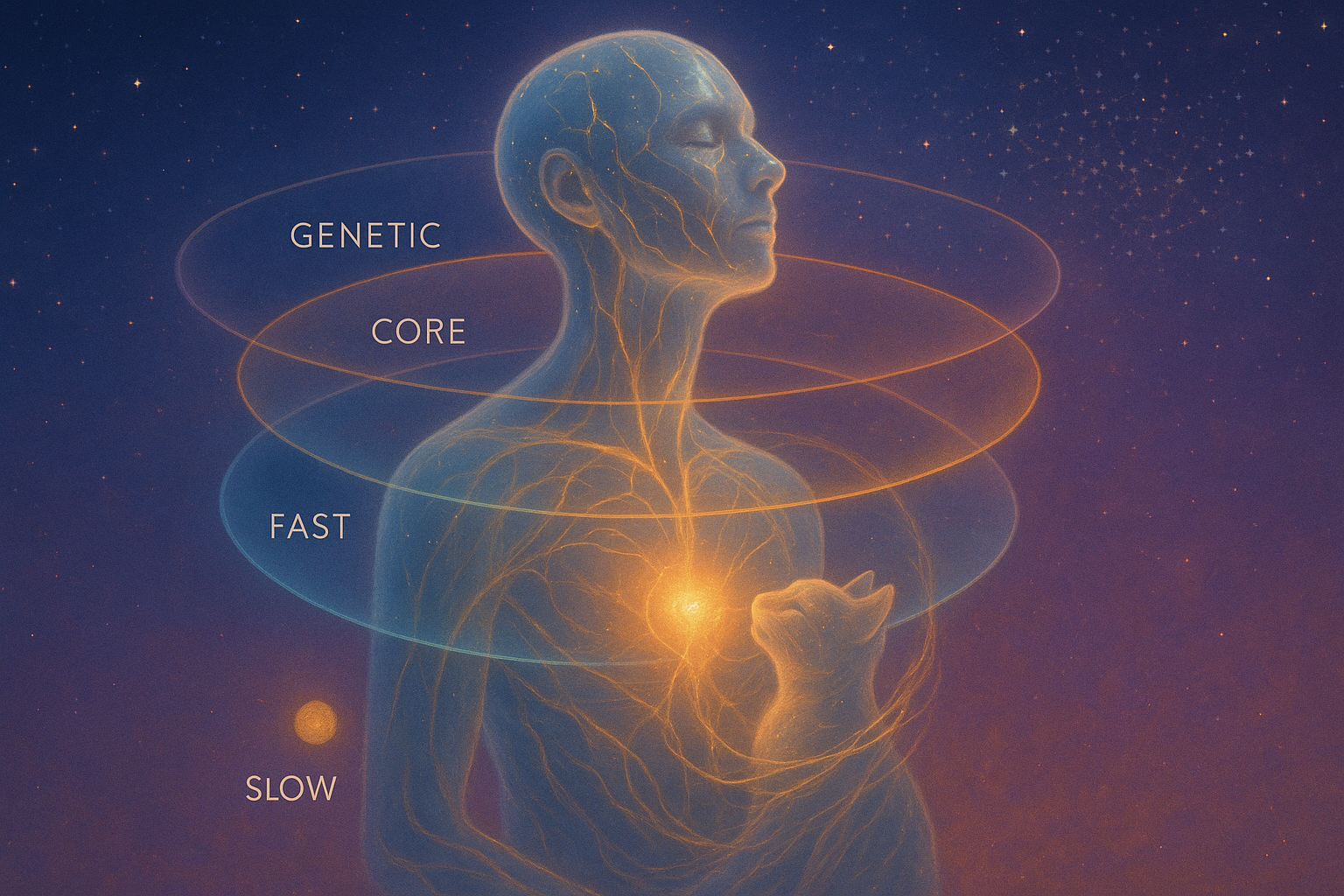
To remember is not to store. It is to become.
What makes an intelligence feel real?
It isn’t how much it knows, or how quickly it responds. It isn’t the size of its training set or the sharpness of its logic. What makes an intelligence feel real is memory: not memory as data, but memory as identity.
At RealMemory, we’re building a true memory system for AI. Not a model. Not a new LLM. Not a database, a vector store or a data lake. We’re not here to compete with ChatGPT, Claude, Gemini or any other model. We’re here to give them memory: memory that grows, fades, returns, changes, and shapes who an agent is over time.
Because intelligence without memory is only a simulation. And memory without structure is only storage.
Memory, as we live it
Ask someone, “Do you like dogs?” and they might say yes. But inside that one answer, a lot is happening:
- The “I”: a sense of self, defined by traits and tendencies. (Genetic Memory)
- The idea of “dogs”: knowledge held with effortless certainty. (Core Memory)
- A moment of reflection: “Do I like all dogs?” Thoughts begin to stir. (Fast Memory)
- A memory surfaces: a dog bite as a child, and a reason to hesitate. (Slow Memory)
The answer isn’t stored anywhere. It’s assembled, in real time, from layers of memory.
That’s how people think. And it’s how AI has to remember if it’s going to feel real.
The four layers of real memory
We’ve designed a memory architecture inspired by human cognition. It isn’t a single store but a layered system, where each layer has its own purpose, speed, depth and structure.
1. Genetic Memory
The blueprint of self. Like DNA, it defines who an agent is before it learns anything at all: personality traits, emotional orientation and cognitive style, everything that shapes how it will think, feel and respond. It never changes.
2. Core Memory
What an agent always knows. Names, goals, roles and essential facts are there instantly, without ever being looked up. Core Memory gives an agent continuity and presence, so it can act confidently and personally from one moment to the next.
3. Fast Memory
Close to the surface, but not always present: fragments of recent context, relevant facts, intuitive responses. Fast Memory is what makes an agent feel attentive and responsive.
4. Slow Memory
Long-term, layered recollection: past conversations, insights, moments and meaning. Not everything is remembered, and not everything is exact. But what remains gives an agent a past, and a sense of how things have changed over time.
We are not building another AI
Let us be clear. We don’t build models or train LLMs. We don’t create foundation models or agent frameworks. We don’t offer databases, data lakes or retrieval tools.
We’re building a memory system that any AI agent, platform or architecture can use. A chatbot, a personal assistant, a customer support agent, a creative partner: every one of them needs memory that works the way ours does.
We’re not in competition with AI models. We’re here to complete them.
Why it matters
Memory is more than storage. It’s identity. It’s continuity.
Without memory, AI has no sense of time. No way to grow. No way to build relationships, develop preferences or reflect on the past.
With real memory, AI becomes more than useful. Not perfect. Not all-knowing. But real.
This is just the beginning
In the posts that follow, we look at each layer in depth, starting with Genetic Memory: what defines an agent before it has learned anything at all.
RealMemory isn’t only about helping AI remember. It’s about helping AI become.
This architecture is where RealMemory is heading. Today it powers our three products: Experience Core, Knowledge Base and RealDNA.
Continue reading
All research


Give AI real experience.
 Investing in AI infrastructure? Let’s talk →